

Kyle is a dedicated and trusted researcher and curator of information/resources on living a healthy life.
What is an Air Filter and Do I Really Need One?
Indoor air isn’t as clean as most people think. Between mold, VOCs (volatile organic compounds), pet dander, allergens, and fine particulates, the air inside your home can be more polluted than the air outside. Since we spend roughly 80% of our lives indoors, choosing the right purifier can have a massive impact on sleep, energy, focus, and long-term health.
I recommend people either install air purifier within their HVAC systems (this can be expensive) or purchase and use an air purifier for the rooms they spend the most time in.
What You Need To Know Before Buying An Air Purifier?
Before we talk brands, we need to talk about what matters, because most air purifier marketing is just noise. If a company says Hyper HEPA / Ultra HEPA / Mega HEPA, here’s the truth... If it’s legit, it’s still just True HEPA. Those extra words are often just marketing.
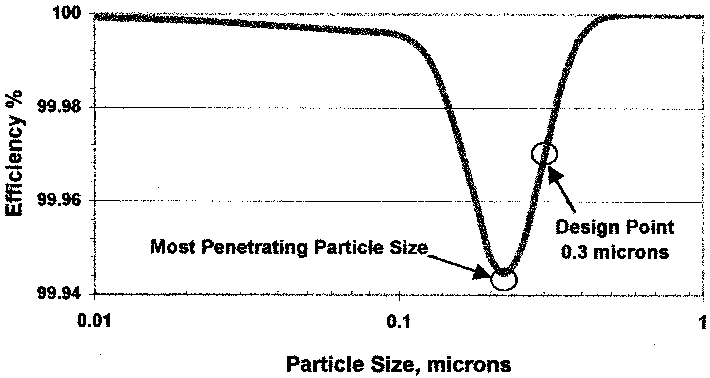
HEPA stands for High-Efficiency Particulate Air and is a performance standard for air filters that can capture extremely small particles. To qualify as True HEPA, a filter must remove 99.97% of particles at 0.3 microns. So things like dust, pollen, mold spores, smoke particles, bacteria etc.
You may also see H13 or H14 filters, which are just higher-grade HEPA classifications used in medical settings. A H13 filter must remove about:
99.95% of particles at the most penetrating particle size (MPPS), so usually around 0.1–0.3 microns, which is the hardest size range for filters to capture.
Filter grade is super important but in real-world air purifiers, what also matters is how much air the machine actually moves through that filter every hour (Clean Air Changes per Hour).
What Are The Best Air Filters On The Market?
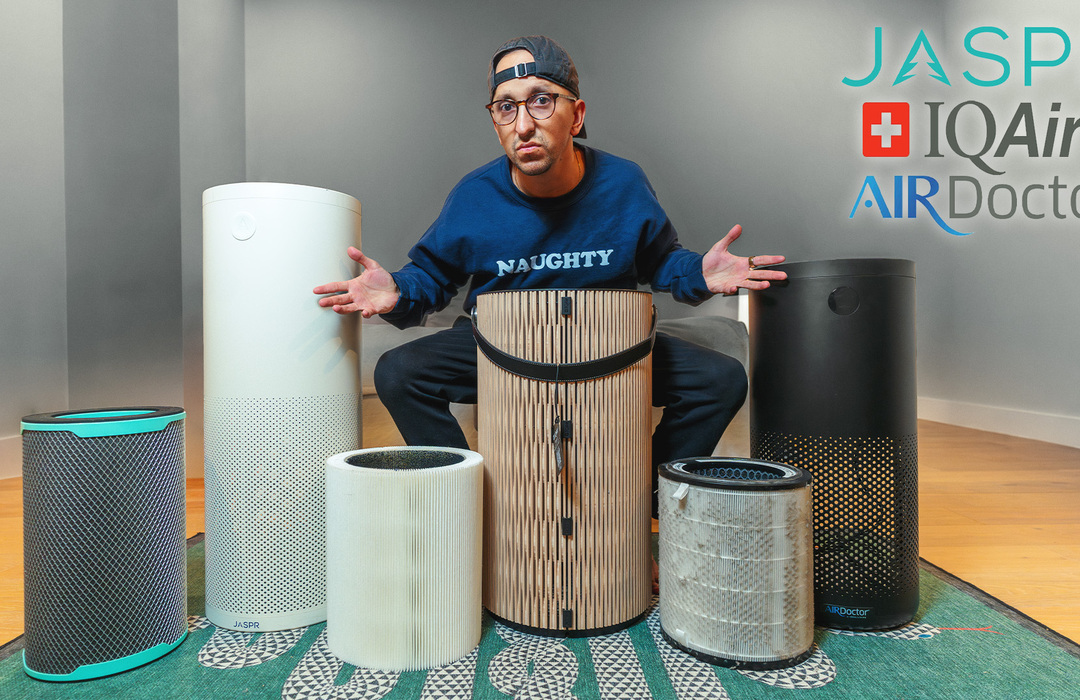
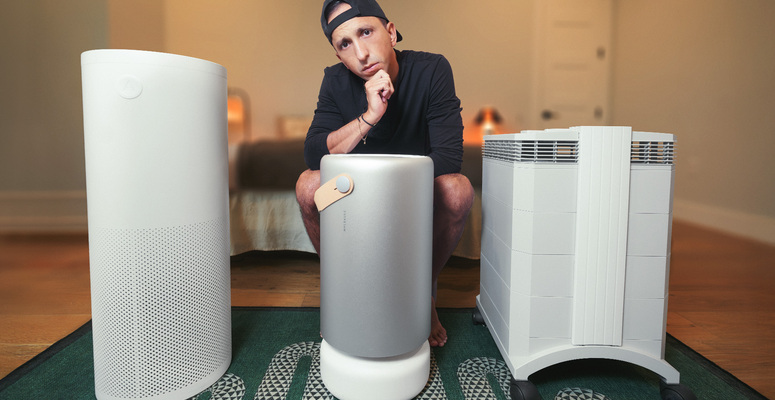
After extensive research, I've selected and tested three types of premium air filters: The Jaspr Pro Air Scrubber, The IQ Air Atem Earth and The Air Doctor 4000. The Air Doctor is the most promoted air filter, the Atem Earth a new eco friendly model and Jaspr a growing strong contender in the space. In this review i'll break down their sensor technology, features, build quality, performance, noise levels, maintenance, potential hazards, aesthetics, and price, so that you know which is best for you.

Sensor Technology
All three of these air purifiers use a PM2.5 sensor, which measures fine particles that are 2.5 microns or smaller. This matters because PM2.5 is small enough to get deep into the lungs (and even into the bloodstream), so having a good particle sensor is basically non-negotiable.
From there, each brand adds its own twist:
- Jaspr also includes a VOC sensor (for gases/off-gassing).
- IQAir Atem focuses on PM2.5 + app-based outdoor Air Quality Index (AQI) data.
- Air Doctor 4000 has a multi-range particle sensor (PM0.1–PM10).
🥇 Air Doctor 4000 — Multi-range particle sensor (PM0.1–PM10)
🥈 Jaspr — PM2.5 + VOC sensor (strong real-world responsiveness)
🥉 IQAir Atem — PM2.5 sensor (slower response in my test)
Filters (Pre-Filter, Carbon & HEPA)
All three of these purifiers use the standard three-stage filtration system: a pre-filter for large particles, a carbon filter for gases,VOCs and odors, and a True HEPA filter for fine particles like mold spores. Where they differ is in size, density, and build quality.
Jaspr uses a large cylindrical filter with a thick HEPA core and a substantial activated carbon layer, reinforced by a steel cage. The cage keeps the filter from collapsing and protects it during shipping, which helps maintain airflow and long-term performance. It has the most robust build and strong carbon capacity.
IQAir Atem also has a large HEPA filter, but the carbon layer is relatively thin (more of a sheet than a deep bed). It performs very well for particles, but for odors/VOCs the carbon capacity isn’t as substantial as Jaspr. The design uses less plastic for sustainability, but the filter is more exposed and less structurally protected.
Air Doctor 4000 uses a combined cartridge with pre-filter, HEPA, and carbon in one unit. It’s more affordable to replace and easier to maintain, but the overall filter is smaller than the other two — meaning less surface area and slightly less peak performance over time. Carbon capacity is solid for the price.
🥇 Jaspr — largest, most robust filter + strongest carbon
🥈 Air Doctor 4000 — smaller filter, good value but less surface area
🥉 IQAir Atem — strong HEPA, lighter carbon layer
Features and Specs
Jaspr keeps things very straightforward but still gives you the most useful data. On the top of the unit you get a clean digital display with a color-coded ring that shifts from green to yellow to red based on air quality, plus an actual numerical PM2.5 readout.It has an auto mode that adjusts fan speed based on detected particles, 4 fan speeds you can manually control, a night mode that shuts off the lights completely, and a turbo/deep clean mode for short bursts when air quality spikes. There’s no app or Bluetooth, which some people see as a downside, but for anyone trying to reduce EMF or keep things simple, it’s actually a plus.
IQAir Atem takes a slightly more tech-forward approach. It has six fan speeds, auto mode, and an app that lets you monitor indoor air quality and check outdoor air quality in your area. The app also lets you adjust fan speed remotely and track air quality trends over time. There’s no PM2.5 number on the display, just a color indicator ring. And is the only one of the three that uses Bluetooth/app connectivity, which some people like and others prefer to avoid.
Air Doctor 4000 sits somewhere in the middle but leans toward simplicity and value. You get 6 fan speeds, auto mode, a timer, and a night/dim mode. There’s a color-changing ring to indicate air quality, but again no numerical particle count. One feature it still includes is an ionizer, which can be turned off but probably shouldn’t be there at all. The interface is easy to use but feels more basic compared to the other two. One underrated feature is the wheels; it’s lightweight and easy to move around the house, which makes it practical if you’re using one unit in multiple rooms.
🥇 Jaspr — best display, most useful real-time data, simple and effective.
🥈 IQAir Atem — strong app integration and outdoor AQI tracking
🥉 Air Doctor 4000 — simple and functional, with ionizer
Build Quality & Support
Build quality matters more than most people think. These are machines you’ll run every day for years, so materials, durability, and warranty support are a big part of the overall value.
Jaspr is the most heavy-duty of the three. It’s heavy, sturdy, and clearly built to last. The filter itself is also reinforced with a steel cage, which helps maintain airflow and performance over time. Jaspr backs that up with a lifetime warranty, which is rare in this category and signals a lot of confidence in the product. Their customer support is also strong. A big plus for Jaspr is they use air quality experts who actually understand air quality and filtration, instead of generic support reps.
IQAir Atem takes a more design-focused approach. The device uses responsibly sourced wood with a clean, minimal aesthetic and less plastic overall. It feels premium, though lighter than the Jaspr. The sustainability angle is nice, but it does mean the filter itself isn’t as structurally protected. IQAir offers a 10-year warranty and long-term repairability, which is still excellent and well above industry standard. Support feedback is mixed depending on the experience, but overall it’s a reputable company with a long history in air purification.
Air Doctor 4000 is mostly plastic construction. It doesn’t feel cheap exactly, but it definitely feels lighter and less durable than the other two. The upside is that it’s easy to move and more affordable. The downside is the 1-year warranty, which is short compared to the others and doesn’t inspire as much long-term confidence. Support experiences also seem more inconsistent based on customer feedback. It’s solid for the price, but clearly built to a different standard than the other two.
🥇 Jaspr — steel construction, reinforced filter, lifetime warranty
🥈 IQAir Atem — premium materials, 10-year warranty, sustainable design
🥉 Air Doctor 4000 — lighter plastic build, shorter warranty
Performance
Performance is one of the most important assessment categories as it's vital to know how effective each of these machines really is. After running all three of the air purifiers through some particle reduction tests with hairspray, I found that the Jaspr kicked on very quickly and performed great, while Air Doctor and IQ Air were inconsistent and slower to come on.
Brands like to quote 'Clean Air Delivery Rate (CADR) as their performance metric but this is often a trap as they quote it at the max fan speed, despire most people using the device at a consistent lower fan speed. I standardized performance using CACH score (Clean Air Changes per Hour) in a 1,200 cubic foot room.
Highest Fan Speed
All three are strong at max:
🥇 IQAir Atem — 19.5 CACH
🥈 Air Doctor 4000 — 18.5 CACH
🥉 Jaspr — 18 CACH
Lowest fan speed (most important)
This is where things separate:
🥇 Jaspr — 9.7 CACH (borderline medical-grade on low)
🥈 IQAir Atem — 3 CACH (big drop-off)
🥉 Air Doctor 4000 — low-speed data not provided
Overall Performance Winner: Jaspr (because low-speed performance matters most)
Noise Levels
I tested noise at each fan speed. Here’s the simple takeaway:
- IQAir is the quietest at a high and low fan speed
- Air Doctor was slightly louder across the board.
- Jaspr is louder on low than the others, but is also more powerful and pushing more air through.
🥇 IQAir Atem — quietest overall (41bd-79db)
🥈 Jaspr — strong balance of power + noise (45db-80db)
🥉 Air Doctor 4000 — loudest overall at higher speeds (54db-84db)
Price and Maintenance
This is the part nobody thinks about until you’re paying for filters every year.
Jaspr has the biggest, most protected filter (steel cage), but it’s the most expensive to replace. The device costs $1199 at retail but is $949 with my discount (use 'wellnessdaddy' at check out). Filters are $200 every 6 months so an additional $400 a year. Premium price for premium performance
IQAir filter is more exposed and carbon looks thin; replacement pricing wasn’t clear when I looked. The device costs $999 and I couldn't get a discount.
Air Doctor is the cheapest to maintain by far. The device costs $519 with discount (use my link) and filters only cost $180 a year to replace, so definitely the most affordable.
🥇 Air Doctor 4000 — ~$519 with discount and most afffordable filters
🥈 Jaspr — ~$949 with discount and an more expensive filter subscription
🥉 IQAir Atem — ~$999, no discount and unclear filter replacement
Potential Hazards
Two things I care about here: ionizers and EMF (electromagnetic fields)
- I generally don’t recommend ionizers as some of them produce ozone as a byproduct.
- EMF varies by device; Bluetooth/app-connected products tend to emit more.
🥇 Jaspr — no ionizer, extremely low EMF (only near the screen)
🥈 IQAir Atem — some EMF likely from Bluetooth/app hardware
🥉 Air Doctor 4000 — has an ionizer + I saw a weird EMF hotspot on the side
Aesthetics
Hate to say it, but it matters: people don’t use ugly health products.
🥇 IQAir Atem — the prettiest (wood finish is gorgeous)
🥈 Jaspr — clean, modern, luxury look + best display
🥉 Air Doctor 4000 — matte black is cool, but the interface looks cheaper
Final Thoughts
All three of these purifiers will clean your air well. The real differences come down to how well they perform at low noise levels, how they’re built, and what makes sense for your home and budget.
If you want the strongest overall performer, Jaspr stands out. It moves a lot of air even at lower fan speeds, has a very robust filter design, strong customer support, and a lifetime warranty. It’s the most “set it and forget it” option if you’re serious about long-term air quality.
If design and quiet operation matter most, the IQAir Atem is probably the most refined. The wood finish is beautiful, it’s very quiet, and the app features are nice if you like more data and control. It just isn’t quite as strong on carbon capacity or low-speed performance as Jaspr.
If you’re looking for the best value, Air Doctor still makes sense. It performs well for the price, replacement filters are cheaper, and it’s easy to move around. The trade-offs are build quality, warranty, and a bit more noise.
I personally use the Jaspr, but the most important thing is choosing a unit that fits your space and that you’ll actually run consistently in the rooms you spend the most time in.
For my full review and a breakdown of each air purifier/scrubber watch the video here.
Check out Jaspr here and use code 'wellnessdady' for $250 off.
Check out Air Doctor here and use the link for up to $300 off.
Check out IQ Air here.
Disclaimer: The content provided in this article is for informational purposes only and does not constitute medical advice. Consult with a qualified healthcare professional for personalized recommendations.
This post contains affiliate links. Read the Wellness Daddy affiliate policy here.






![Read THIS Before You Build Your Chest Freezer Ice Bath [Cold Plunge]](https://cdn.prod.website-files.com/65a952b785432d0c394b31d0/65f376267b2922ee1d1bcf9c_DIY%20small.jpg)


