Rythm is a monthly at-home blood test. You collect the sample yourself with a device that goes on your arm, ship it off, and get 20 biomarkers back in a dashboard for $79 a month. I ran a full collection start to finish, timed it, sent it in and went through the results. Here's my experience, what I like, what I'd change, how it compares to Function Health and Superpower, and who I think it's for. Let's dive in.
The At-Home Collection
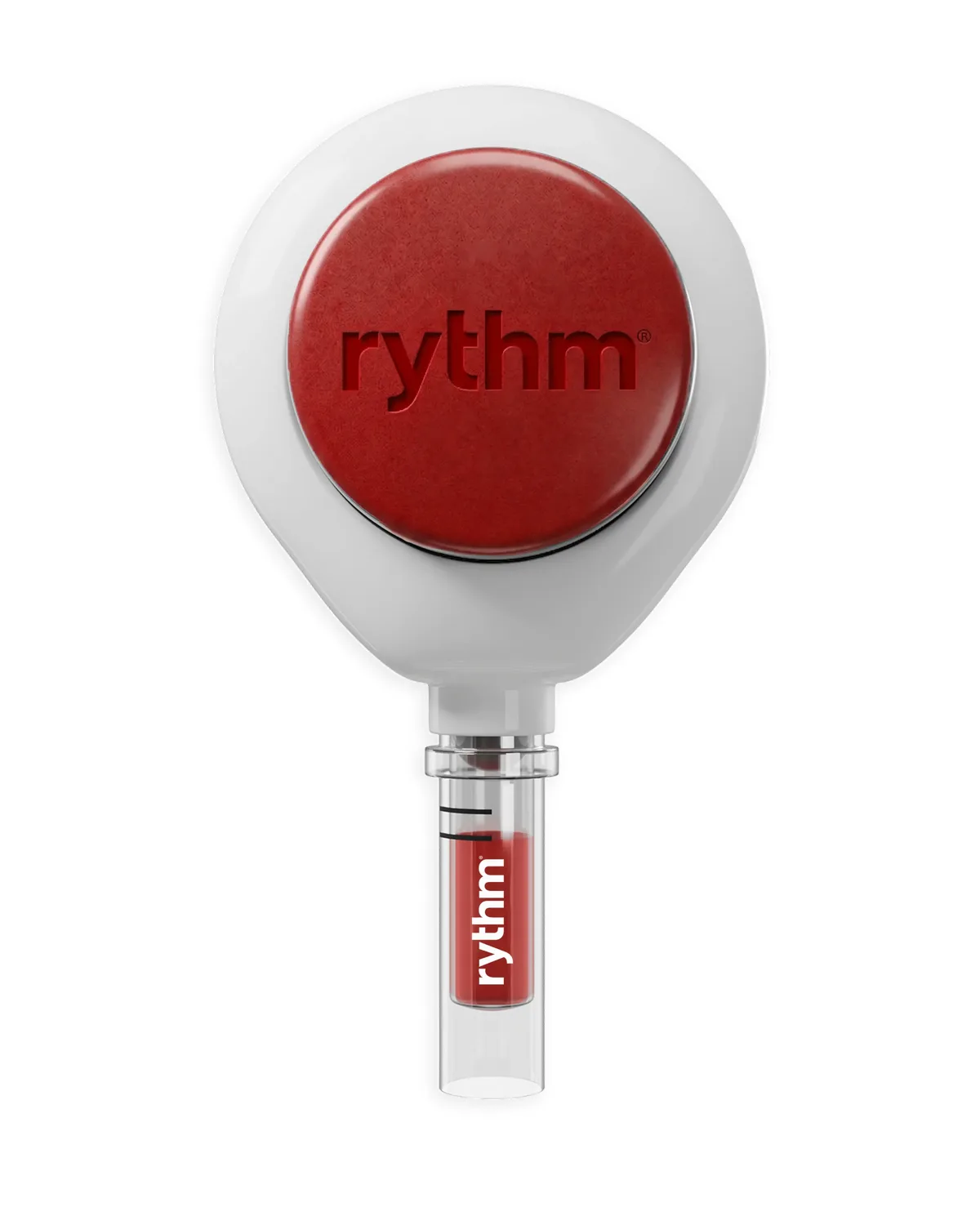
Step one is scanning the QR code on the little baggie that holds your blood vial. That pulls up a walkthrough video for your first collection. Everything you need is in the kit:
- Heating pack
- Collection device: the piece that punctures the skin
- Gauze and alcohol
- Micro band-aid
- Case and vial
You pop the heat pack one way to start it, and if it doesn't start to crystallize you might need to flip it around. I have no idea how that works, but it's very cool to watch. Once it's fully up, massage it around, put it on your arm and hold it there for 4 minutes.
Then I put the heat pack aside and took the collection device. I didn't feel anything. I was sitting there wondering whether anything was happening, and then the vial looked pretty full. You peel it off, put the gauze on, cover it with the micro band-aid, then detach the vial and drop it in the sample bag. Start to finish it took about 20 to 25 minutes. Not bad.
The technology is called the Tasso, and it uses vacuum-assisted capillary suction. No finger prick and no needles. You slap it on and it sucks the blood out. I don't know exactly how it works, but if you want to look at the technology, check out the Tasso device.
Getting the Sample to the Lab
Rythm lets you request a pickup from your house instead of driving to FedEx, which I thought was a really cool option, so I gave it a try. The window I was given was 10:00 a.m. to 6:00 p.m.
The FedEx guy never showed up, which was a little upsetting and a little sad. I went and delivered it myself to a FedEx near me and dropped it off. The results came back really quickly though, and I was happy about that.
My Results
Of my markers, 55% came back in the optimal range, 40% in the average range and 5% out of range.
As you do more collections you also unlock a Rythm score and a biological age. All the blood work companies are doing biological age now, because it's trendy and it's easy to share on social media. But with the number of biomarkers Rythm collects, this seems like a little bit more of a gimmick than anything. It's just not enough data to give you a true picture of what your biological age is.
Inside the Platform
Scroll down and you see the markers that were tested, grouped by category: hormone, metabolic efficiency, heart health. Average is a grayed-out bar, optimal is blue and out of range is red. It's straightforward to read, and you can switch between card view and table view.
Click into a single marker, apoB for example, and you get more detail: what you need to know, how to improve it, related biomarker impact, three things you might not know, and a learn more option. From there you can take the question into the AI, which gives you prompts that are sort of automatic, or you can just have a conversation and go back and forth. The dialogue is very similar to what you're used to with other LLMs. I don't know what their model is based on, whether they're building it internally or syncing it with another program, but I'd be really curious to find out.
Below that are the generalized insights, and generalized is an accurate description. These are just exercises anyone should be doing: sprinting, swimming, lifting weights. This lacks specificity, and this is my gripe with a lot of companies right now. People don't need specificity, they need precision. They need stuff that is hyper relevant to them.
If you're going to charge that much a month, collect a big health intake form up front. What are my goals? What am I focused on? Where do I want to be in 3 months, 6 months, 12 months? Then build me a timeline and a program inside the platform. Data without implementation is just more noise. As consumers we need tailor-made solutions.
What I Like
The collection process. This was the best collection process for getting my bloods done that I've ever done. It was so easy and so surprising that it gets me thinking: if this technology can be scaled, and it's consistent, and it works, it could revolutionize how we think about getting our bloods done. That's a sticking point for a lot of people who don't like needles, don't like going to the lab, and find the whole thing uncomfortable. It hasn't been disrupted for a very long time.
Testing more often. Most people don't get their bloods drawn even once a year. There are shortcomings to the monthly model that I'll get into, but I'm very bullish about people getting excited about testing their blood more frequently, and I love that this is the narrative being pushed forward. It's hard to see a number out of range and not want to do something about it. Data makes behavior change automatic.
The feedback loop. With specific biomarkers you could be trying to move numbers through diet, lifestyle, supplementation, peptides or other therapies, and you want that quick feedback loop to see if it's actually making a difference so you can adjust in real time. Getting results back so quickly helps that even more.
What I'd Improve
The panel is too narrow
With a 20 biomarker test I don't feel like you're getting enough depth to justify the price. Testing is very cheap. Yes, you get the platform and that's nice, but this is not giving me a full enough picture. If you're going to be taking blood, you should be doing deeper testing and looking at more biomarkers. It would be great to see immune system markers, B vitamins, electrolytes, blood sugar, omegas and more hormones so we can get a clearer picture of what's really going on.
There's probably a reason for this. Based on the research I've done, there seem to be limitations around what this capillary suction draw can test for. The other limitation with this collection method is that it seems like the data may not be as accurate or as precise as an intravenous blood draw.
Monthly is the wrong rhythm
A lot of these numbers are not going to move in one month. They take 2 months, 3 months, sometimes even 6 months to show meaningful change. Roughly how it breaks down:
- Within the first 30 days: triglycerides, CRP, ferritin, the thyroid numbers, the testosterone numbers and two hormonal markers
- 1 to 3 months: heart health, liver, albumin, vitamin D, creatine and sex hormone-binding globulin
- 3+ months: the LDL to apoB ratio, remnant cholesterol and the rest of the markers
So you're actually over-testing. To me it would make sense to only test every quarter. It's just the wrong rhythm. I like the idea of having a rhythm, a more consistent rhythm, but monthly is a little overzealous. So, it seems like a big waste.
You can't upload your own data
You can download your collections, but you can't upload anything, which is kind of a bummer. The other platforms I've worked with and tried have that feature and I think it's super important, because it informs the AI coach on what you should be doing. The more data these platforms have, the more powerful they can be.
The sample has to move fast
You really do have to get it picked up or dropped off as quickly as possible, otherwise it's going to skew the results. I found an angry review from someone whose sample wasn't picked up for 4 days, and it kind of loses the results after 72 hours. I did a quick search on Google AI and it said the sample needs to be refrigerated in the first 30 minutes to 2 hours, and then ideally it reaches the lab as quickly as possible.
I don't want to ding them too hard here, because they're trying to do the right thing: press a button, have someone come pick it up, make it as seamless as possible. In theory that's a really good idea, but you've got to deliver on it, because if you don't it sets the wrong expectation. If you say drop it off at FedEx, people think, no big deal, I'll go drop it off.
Rythm vs Function Health vs Superpower
- Biomarkers: Rythm 20 focused, Function Health 100 to 160+, Superpower 100
- Testing frequency: Rythm monthly, Function and Superpower one to two times a year
- Collection method: Rythm at-home Tasso kit, Function Quest, Superpower Quest or LabCorp plus a $119 at-home upsell where they send a phlebotomist to your house
- Price per test: Rythm $79 per month, Function $340 with my code, Superpower $169 with my code
- Turnaround: Rythm 2 to 5 business days, the fastest by far. Function a few days for some results and up to 4 weeks for others. Superpower usually 2 to 5 business days
- Ongoing support: no concierge customization with Rythm or Function, though Function gives you clinician notes on your results. Superpower has it
- AI: all three have one, some better than others
- Blood sugar: Rythm no, Function yes, Superpower yes
- Full hormone panel: Rythm no, Function yes, Superpower yes
- Marketplace: nothing for Rythm or Function, Superpower has one
- Wearable integration: I think coming soon for Rythm; available with Function and Superpower
Who Rythm Is For
Rythm is perfect for people who hate going to the lab and people who are afraid of needles but actually need to get their blood work done. These are probably the people who need it most, because they're the ones who always skip their annual physical and won't go to the doctor because they're afraid or because it's too inconvenient. It's also a good option if you live somewhere remote where there isn't a Quest or a LabCorp close by.
It's a strong fit for someone working on their heart health, thyroid health or hormones who is making real alterations to their lifestyle, diet and sleep, and just wants to know that what they're doing is working, and those specific numbers are all they need. I could see a really good application for people using TRT or HRT, or on peptides that affect their hormones, heart health or thyroid health, who want to measure whether it's working in a tight window. You can actually see meaningful change in 30 days there, so testing regularly kind of makes sense.
It's also great for someone who is busy and always on the go and is never going to make the time to sit in a lab. It gets shipped to wherever you're at and you send it off. If you're not getting your blood done because of all these friction points, and this is the thing that gets you to do it, then I really think it's worth it.
Who Should Skip It
- If you've never done your blood work and you need to get a full picture, I don't think this is right for you.
- If you have any type of real health condition going on, autoimmune, gut issues, environmental toxins, metabolic disorders or anything more complex, the panel is too limited and too narrow for you to have meaningful data to work with.
- If you need more guidance, more precision and more hands-on support, this isn't the right product. That's what most people actually need.
Total Wellness Score
- Effectiveness: 8/10. Excellent for what it tests for, but limited by the panel, which means you have a limited picture of what's going on. The platform itself could use a lot of work.
- Service: 7/10. The fast results are amazing and I was super happy about that, but the fact that the guy didn't come and pick it up is kind of a bummer.
- Price: 6/10. I don't think the value is crazy good compared to what else is out there. There are really good options for much deeper testing and much better platforms at just a little more cost.
- Experience: 8/10. My collection experience was amazing. It actually blew me away and I think it has so much potential.
- Daddy factor: 7/10. They're onto something and the idea is really good, but the execution needs improving in how they deliver the results. They just need way more biomarkers. I'd bet they're working on that right now and this review will be outdated in a few months. If they do it, that number goes up for sure.
Total: 36 out of 50. That's okay. Not the best score, but I have some really meaningful feedback for them, and if they improve, that score can go way up. I'd be happy to do a follow-up review.
What I'd Recommend Rythm Do Next
- Switch from monthly testing to quarterly testing. This just makes so much more sense.
- Add way more biomarkers. All the ones I mentioned above.
- Fix the pickup situation. Either don't offer it, or find a way to nail it every time.
- Improve the platform. Make it more customized and more decision-based, so it feels like what I actually need instead of generalized insights.
- Add an upsell for ongoing support with a real human. A lot of people will take you up on that if you give them the option.
Final Thoughts
Directionally, I think Rythm is on a really good track. I like their idea, I like their blood testing technology and the concept is really good. It just needs to be tweaked. If they can figure out a way to test a lot more biomarkers, this is really going to be something special. If they can nail their onboarding, collect way more data up front and add back-end support, it becomes very interesting very quickly.
The price definitely adds up and you don't need to test every month. But at this point in time it's probably better than going to your GP, because you're testing about the same amount of numbers you're going to get in your annual physical, maybe a few more in the physical.
If you have any type of health situation you're probably going to need something different from Rythm, with more depth and more support. But I don't think it has to be either or. You could get your full comprehensive biomarkers done by Superpower or Function Health, and then if heart, thyroid or testosterone issues are what you want to work on, consistently retest with Rythm. That would make sense.
If Rythm takes this feedback and integrates it into their product, they're going to have an amazing offer.