What These Platforms Are And Which Ones I Tested
A blood testing platform sells you a panel, sends you off to get your blood drawn, then hands the results back inside a dashboard where you can see everything visualized. I tested four of them so you don't have to: Superpower, Function Health, Vitality Blueprint and Rythm.
I think this is one of the most universally important things you can do for your health, because if you don't test, you're basically guessing. I spent $300,000 on my own health and wasted a lot of time, money and energy doing it, and I'd like to save you the heartache. Honestly, I don't care which one you end up with, as long as you go and get your blood work done.
Here's where they landed on price when I made this:
- Superpower: $169 with my discount
- Function Health: $349 with my discount
- Vitality Blueprint: $337 with my discount
- Rythm: $79 per month. My discount takes the taxes off, so the first month comes out at $78
I've made individual reviews of each platform if you want to go deeper into any particular company. Let's dive in.
How Each One Works And What It Tests
They all start off very similarly. You purchase, you fill out a form about your health history, family history and your goals, you schedule your blood work, you go get it done, and the results show up visualized inside the dashboard. What they actually test for is where the story starts to get different, and depending on your specific needs is probably going to be a really important factor in which company you choose.
Superpower
A 100 biomarker panel with pretty good coverage on metabolic health, inflammation, liver, kidneys and nutrient status. The big things are in there. You also get their concierge, which is a text care team of nutritionists and naturopaths who go over your results with you, and an AI that sees everything you filled in plus everything that comes back and builds you a customized three-step plan. Results come back in 2 to 5 business days.
Some unique distinctions. For an extra $119 someone comes to your house and takes your blood. And it automatically pulled about three years of my previous blood work from Quest and LabCorp into the dashboard, which blew me away. I must have checked something off at checkout that gave them access. They also text you at every step, so you know when your draw is coming up and when results are landing.
The panel isn't as deep as Function's, but the marketplace covers a lot: discounted supplements, peptides and medications, plus add-on testing for mineral deficiency, autoimmune, environmental toxins, mold, heavy metals, and I believe a gut test and a cancer test as well. Some of those you could only get through a functional medicine doctor before. The biggest miss on the initial panel, for me, is thyroid antibodies. I've had Hashimoto's for a while and I've been working on putting it into remission, so I have to add an extra test to get mine checked. It isn't expensive, but it's so common that TPO and a few more of those advanced thyroid numbers should be standard.
Function Health
160 biomarkers across two tests: 100 on the original panel and another 60 on the follow-up six months later. That's the most biomarker coverage and depth of any platform I tested, and thyroid antibodies, TPO, heavy metals and a few other niche markers are all included as standard. Results are reviewed and flagged by an actual clinician team who write you a report, and there's an AI connected to your health data that also takes your wearable data. They've partnered with Ezra for CT scans and MRIs, and there's a tab where they build training or nutrition programs from your data.
The unique distinctions are a really in-depth questionnaire and really, really deep testing. Their CIRS test is one more people should be checking, but it's way overpriced at something like $799, which is absolutely insane. The regular add-ons are cheap though. Running my thyroid antibodies and TPO is only 29 bucks, so I can keep a really good eye on that marker while I'm changing my diet, lifestyle or supplementation. That's big. The MRI is $799, and a full retest is $269, cheaper than the original panel. Good job, Function.
The trade-off is time. Results take between 3 and 4 weeks, and the clinician summary around 2 to 4 weeks depending on how quickly your bloods come in.
Vitality Blueprint
108 biomarkers on the standard panel and 137 on the elite one, so roughly the same volume as the others, but with a performance lens on all of it. Function and Superpower are more preventative, more "something might be wrong, let's check it." This is for when you want to perform at your best.
They analyze your bloods across nine performance areas and 10 functional systems, so it reads clusters rather than any single biomarker and runs through two layers of filters. And the ranges aren't the standard range or even the functional range, they're the performance range, so the window of what's in range versus out of range is much, much tighter than everyone else's. What comes back is a 13-week plan built around one constraint, plus biometric and performance metrics tracked alongside the blood work: HRV, VO2 max, body composition and strength.
There's a mobile phlebotomy add-on if you want someone to come to your house, and results come back within about a week. Just so you know, Vitality isn't available in New York, New Jersey or Hawaii.
Rythm
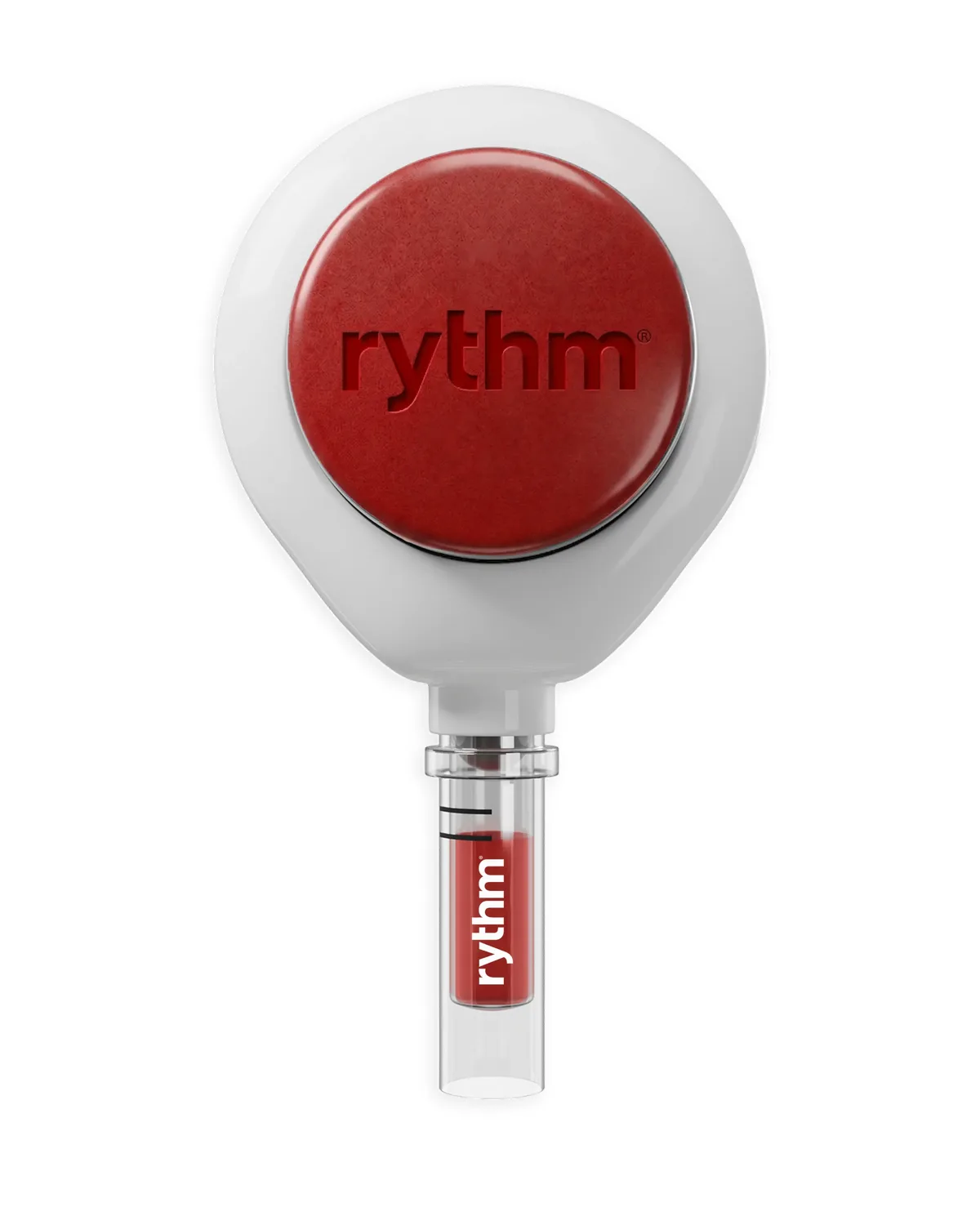
Rythm is a little different. They use a device called the Tasso that you put on the side of your arm and click, and it pulls blood out through the capillary. It's a no-needle draw. The kit arrives in the mail, you do it at home, you send it off with free FedEx shipping, and results come back three days post-lab. You also get an AI chat to interpret your data. One thing to note: if you don't send the sample off soon enough it can compromise the results, so send it quick or schedule a pickup as soon as possible.
The panel was 20 biomarkers, and while making this I saw they'd taken my feedback and pushed it to 28. Counting the actual list it's more like 24, because the rhythm score, biological age and personal baseline aren't biomarkers. You get estrogen, progesterone, total and free testosterone, apoB, LDL cholesterol, hs-CRP, HDL cholesterol, hematocrit, hemoglobin, ferritin, albumin, vitamin D, triglycerides, triglyceride to HDL ratio, LDL-C and apoB particle size, uric acid, fructosamine, TSH, free T3, creatine, sex hormone binding globulin, GGT, ALP and vitamin B12. What I really miss are the immune markers, omegas, blood sugar, cortisol and DHEA.
The monthly cadence is their pitch, but after some deeper research, a handful of markers take two or three months to move the needle, maybe more, so it does seem like over-testing. The fast movers are triglycerides, CRP, ferritin and testosterone. The slow ones are vitamin D, apoB, LDL, HDL and TSH.
My Experience On Each Platform
Superpower
I was pretty hard on them in my first review, and to their credit they've made a bunch of changes.
Go into the data page, pick kidney health, and you can see results going back to June 2023 sitting alongside my October 2025 draw, so you can map your trajectory over time. The fact that no other company is doing this is kind of absurd to me. Mine says 11% improved since January 2025, which gives you a little dopamine hit of "okay, I'm headed in the right direction." Tell the AI what changes you're making and it logs that into memory, so it shapes all the feedback afterwards. Drop in your Function, Vitality or Rythm results and they land on the same timeline. It becomes your true medical home.
Their AI is genuinely sophisticated. A lot of AIs are not that good. This one is really good. I also texted the care team a very specific question about going low carb, heart health and working around Hashimoto's, which needs a nuanced answer. A lot of people buying these things aren't sophisticated with their health, and it's not their job to be, so that hand-holding matters. The action plan is simple now: here's your 8 to 12 week plan, get the gut test, here are the supplements, here's the nutrition. And the marketplace carries VIP, the CIRS medication, so I can book a consult and talk about getting the nasal spray. That's kind of unbelievable. The interface is so clean and intuitive that I think they just murdered it.
Function
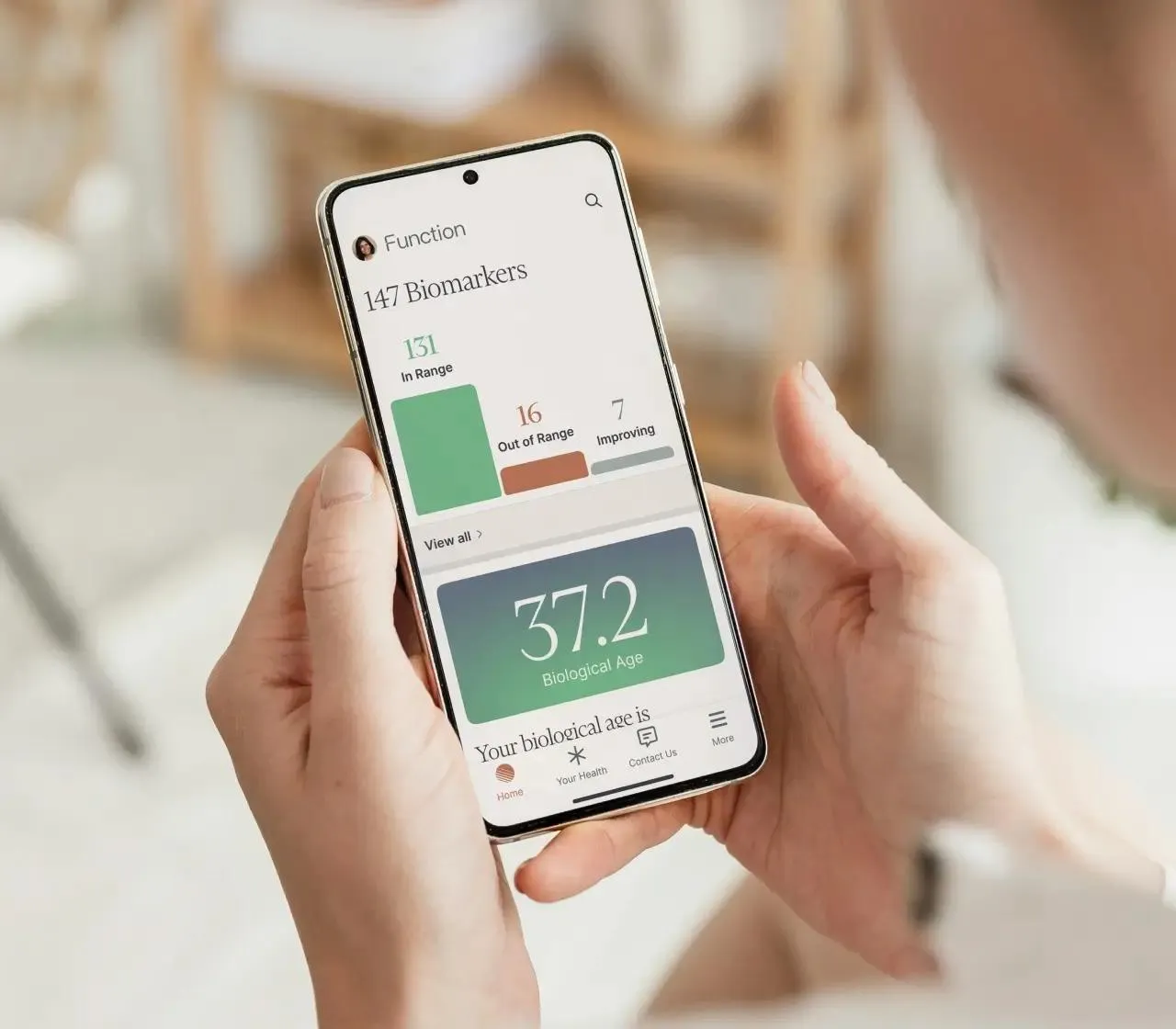
My experience with Function was really good as well. Function started this whole trend of putting your own biomarkers into a portal, and it's powerful because there's so much data in here. Go into my cholesterol, which is a little high for a very specific reason I already know about, and I get a summary, causes, associated conditions, what food to eat, supplements, symptoms I might be experiencing, additional testing and follow-up. Overall, Function is really great. The issue is that it's a lot. It's drinking through a fire hose, and that was my main piece of feedback: they've got to simplify. If you're well-versed with this stuff you'll geek out going into all the weeds like I do.
My other feedback was on the clinician notes. There's clearly a lot of work in them, but some very specific things were missed around my CIRS situation, including a pretty big miss on how stress affects my heart numbers, which is the exact reason my cholesterol is high. I'd put all of that in the intake form in detail, and when I asked Function's AI why it missed it, I didn't get a good answer either. Clinician notes are a good place to start, but they're not the be-all and end-all. Same with Superpower: take your results to a practitioner who understands holistic health before you go and change everything.
The UX could also be improved. It feels a bit clinical and the language could go over people's heads. I had a family member use Function because I was worried about them, and he got really lost on the platform. I also hit a bug where it kept prompting me to finish a questionnaire I'd already finished, and they wouldn't release my clinician notes until it was done. I emailed them, they expedited it within 72 hours, and their customer service was really good about it.
Vitality Blueprint
Everything here runs through the performance lens, starting with the questionnaire. When results come back it isn't just what's out of range, it's really trying to identify that one constraint. After testing a lot of companies now, I think that's probably the best way to do it, because people are already overwhelmed with their health.
Mine came back as low energy availability. It breaks down why, shows the related biomarkers, then gives recommendations I choose from to build my plan: breath work and meditation, more active recovery, walks after meals, prioritizing hydration, a refueling diet plan, eating enough calories, fermented foods, vitamin D and creatine. I added creatine off that recommendation and it was a game-changer for my cognitive health, my focus and my energy. It works.
The results don't feel like a big list of what's out of range, they feel like a scorecard: here's the category to focus on because it's your lowest grade, now let's get that grade up. Where they recommend a supplement, there are links with discount codes for ones they've already vetted as high quality.
Rythm
The collection process is genuinely a huge innovation, and I think it's going to help a lot more people get blood work done, because plenty of people are afraid of needles or just aren't going to make the time to go to a lab. It's painless and it's from the comfort of your own home. When I did it I thought, wow, this is the future of blood work. It takes 10 minutes, you drop a vial in a little baggy, put it in the FedEx envelope and send it off. There's also an option where FedEx comes to pick it up. I tried that and no one ever showed up, which was a big miss.
In the platform my experience was very limited, and you're just not getting that many biomarkers checked, so there's only so much you can do with limited data. The platform isn't as sophisticated as Function or Superpower or Vitality. It's not even in the same ballpark. The AI seems very rudimentary and the recommendations are as generic as can be. The feedback I gave them is that the world needs less general and more specific, and that every company should have an upsell where you can get on the phone with someone and work through your data.
What I Like And Don't Like
Superpower
✅ The concierge at this price point. There's honestly nothing else that comes close on value
✅ The auto-pull from previous data. It really delighted me when I came into the platform and saw it
✅ The touchpoints through the process, the texting and the reminders. It genuinely felt like being cared for
✅ The marketplace for supplements, peptides and prescriptions if you need them
❌ The concierge reroutes to text messages instead of staying in the platform. If you've built a beautiful platform, you should be able to text your care team inside it, or at least have both options
❌ No thyroid antibodies on the standard panel. That's got to be standard on almost every panel
❌ Lots of GLPs in the marketplace feels off brand for a holistic platform. Plenty of people will disagree with me, but to me the culture is going the wrong way on that specific category of peptides
Everything else I didn't like in the past, they've taken on board from my review video and changed.
Function
✅ Thyroid antibodies and heavy metals included on the standard panel. Nobody else I've tested is really doing that
✅ The CIRS test being available at all. It's a niche test most people don't know about
✅ The biomarker detail per result: causes, food, supplements, associated conditions. There's a lot of education in there
✅ They've raised a lot of money, which means the infrastructure to keep improving
❌ No concierge or ongoing support once your data comes back. People really need that
❌ The interface feels too clinical and is hard to navigate for everyday people
❌ Four weeks for the full clinician summary. That timeline needs to come down
❌ The follow-up test is only 60 markers instead of the 100 you get first time
Vitality Blueprint
✅ The performance reference ranges. You can be completely normal on every other platform and still have meaningful constraints, and Vitality helps you find them. This is my favorite thing and I think every company should do it
✅ The one bottleneck plan. Not 20 things to fix, one constraint in priority order with a 13-week plan. I think it's universally so much better than everyone else
✅ The founders spent a decade building this with elite athletes
✅ The biometric and performance tracking alongside the blood work. HRV, VO2 max, strength, blood data in the context of how you're actually performing is very interesting
❌ No concierge and no AI, it's just the plan, and with what's out there right now that feels like kind of table stakes. For a newcomer that can feel like a lot with no one to ask
❌ You can't get it in New York or New Jersey, which is a big inconvenience for people in those states
❌ You can't upload old lab data and feed it into the algorithm. I gave them that feedback and they're working on it
I was delightfully surprised by Vitality Blueprint. They really blew me away.
Rythm
✅ The Tasso collection device is genuinely revolutionary technology. At home, no needles, 10 minutes
✅ The concept of monitoring specific markers more often as you adjust your plan. For the right person it makes a lot of sense
❌ 28 markers is just too narrow for most health situations. No immune markers, no blood sugar, no thyroid antibodies
❌ Monthly testing doesn't make sense for most of their markers. They need two to three months to meaningfully shift, so testing monthly is noise in my opinion
❌ The FedEx pickup reliability problem. If your sample sits too long, accuracy is compromised
❌ The AI recommendations felt super generic, more like placeholders than genuine guidance
❌ You can't upload data from other platforms, so you're stuck in the Rythm ecosystem and stuck on the $79 a month. I can't even get into my dashboard anymore because I cancelled
On this section alone, I'd give Superpower five stars, Function four, Vitality five and Rythm three.
The Head-To-Head Comparison
This is where the rubber really meets the road. Here's the full head-to-head across the variables I think matter most.
- Biomarkers: 100 with Superpower, 160+ with Function, 108 to 137 with Vitality, 28 with an asterisk for Rythm
- Collection: lab or at home with Superpower, Quest with Function, LabCorp or mobile with Vitality, at-home kit with Rythm
- Result speed: 2 to 5 business days with Superpower, days out to four weeks with Function, roughly a week with Vitality, three days post-lab with Rythm
- Subscription: yearly for Superpower, Function and Vitality, though Vitality has a one-time option that costs a little more. Rythm is monthly
- Concierge support: Superpower is the only one that has it
- AI on results: Superpower's is second to none. Function's is still in beta and definitely needs work. Vitality is working on it and doesn't have it yet. Rythm's was very basic
- Reference ranges: functional for Superpower, Function and Rythm. Performance ranges for Vitality
- The plan: three-step plan with Superpower, clinician notes with Function, the 13-week one-constraint plan with Vitality. Rythm doesn't really give you a plan
- Thyroid antibodies: add-on for Superpower, included with Function, not available with Vitality or Rythm
- Heavy metals: add-on for Superpower, included with Function, not available with Vitality or Rythm
- À la carte add-on tests: available with Superpower and Function, not with Vitality or Rythm
- Past labs: Superpower auto-pulls and integrates them into your trends. Function and Vitality allow manual uploads with no integration. Rythm has no uploads at all
- Marketplace: Superpower has discounted supplements plus peptides and meds. Vitality has discounted supplements. Function and Rythm have none
- Wearables: they all sync with your Whoop, Apple Watch or Oura except Rythm, and apparently that's coming soon
- MRI options: Function only
Biggest strength each: Superpower is the UX and the AI sophistication, Function is the biomarker depth, Vitality is the performance lens and the one constraint, Rythm is the collection technology. Biggest weakness each: Superpower is biomarker depth on the standard panel, Function is no human support, Vitality is no concierge and no AI, though that's coming, and Rythm is the lack of biomarkers.
And the thing that surprised me most on each: Superpower was the auto lab pull, which was crazy. Function was the biomarker depth. Vitality was the one constraint. Rythm was the collection experience.
The Wellness Daddy Score
🥇 Superpower — 46 out of 50
🥈 Vitality Blueprint — 43 out of 50
🥉 Function Health — 42 out of 50
Rythm — 36 out of 50
If you want to go deeper into how I scored these, the individual reviews have the breakdowns.
Who Each Platform Is For
Superpower
This one is for most people. If you could only pick one platform and you've never done any testing before, I think it's the perfect one for you. You're not just getting data, you have a team of people and an AI to help you interpret it and work the plan they build for you.
✅ First-timers, people with complex health situations, or anyone who just wants to talk to a real human
✅ People who want the full picture: 100 biomarkers, the marketplace, the next steps, the auto-pull from previous labs and a clear step one, two, three
❌ You need maximum biomarker coverage, or you want the MRIs and CT scans. Go to Function, and if you want, import those results into Superpower so you still get their AI and care team
❌ You're chasing peak performance with no major health issues and you're not a beginner. If you want that tight reference range, look at Vitality
Function Health
This is the comprehensive first-timer's platform, best for the person who wants the most complete snapshot.
✅ You want those 160 biomarkers and the deeper testing with the MRIs or CT scans
✅ You want the best coverage off the initial panel, with thyroid antibodies and heavy metals as standard rather than add-ons
✅ You're self-directed. If you know how to read your own blood markers and build a plan for yourself, Function is probably great for you
❌ You need support interpreting and navigating whatever's going on with your health. The gap between having the data and knowing what to do is very real with Function
❌ You're not tech-savvy. The user interface is not super intuitive
Vitality Blueprint
This is the best platform for high performers and athletes. It's perfect if you've already built a good baseline of health and you want to know the one specific thing that will move the needle most.
✅ You're sleeping well, training well and eating well, but you still feel a little off and there's nothing seriously wrong
✅ You aren't dealing with chronic illness, all your labs come back normal, and you know something's missing
✅ You want a structured program: one thing to focus on and attack for the next 13 weeks before you retest
❌ It's your first time doing blood work. Start with Superpower or Function, get a baseline, then look at Vitality
❌ You need help interpreting the data
Rythm
At the time I'm writing this, Rythm is by no means a comprehensive blood panel. It's a monitoring tool for very specific biomarkers you want to track on a regular cadence.
✅ You're on TRT, HRT or some kind of hormone replacement therapy and you want very tight feedback loops as you change your dose, diet or lifestyle
✅ You're an athlete with no existing health issues watching specific markers like testosterone, CRP and triglycerides to see how training and nutrition are moving things
✅ You genuinely will not or cannot go to a lab. You hate needles, or you live far from one and you're never going to make the time. Getting some blood work done rather than none is definitely the move
❌ It's your first test. There are genuinely not enough biomarkers to give you a full picture
❌ You have Hashimoto's, autoimmunity or any complex health issue. Again, there isn't enough coverage
❌ You're treating it as a replacement for a comprehensive panel. It isn't. Get Superpower, run Rythm for the specific markers you're watching, import those in and let the picture update over time. Use it alongside, not instead
Final Thoughts
No one is going to care about your health as much as you do. I really believe you have to become your own doctor, and all the innovation happening right now is making that so much easier.
Superpower is the one I'd hand to most people, Function is the one for maximum coverage if you're self-directed, Vitality is the one if you're already healthy and chasing peak performance, and Rythm is the one you run alongside a real panel rather than instead of it. But whichever you pick, please go get your blood work done and find out what's going on.