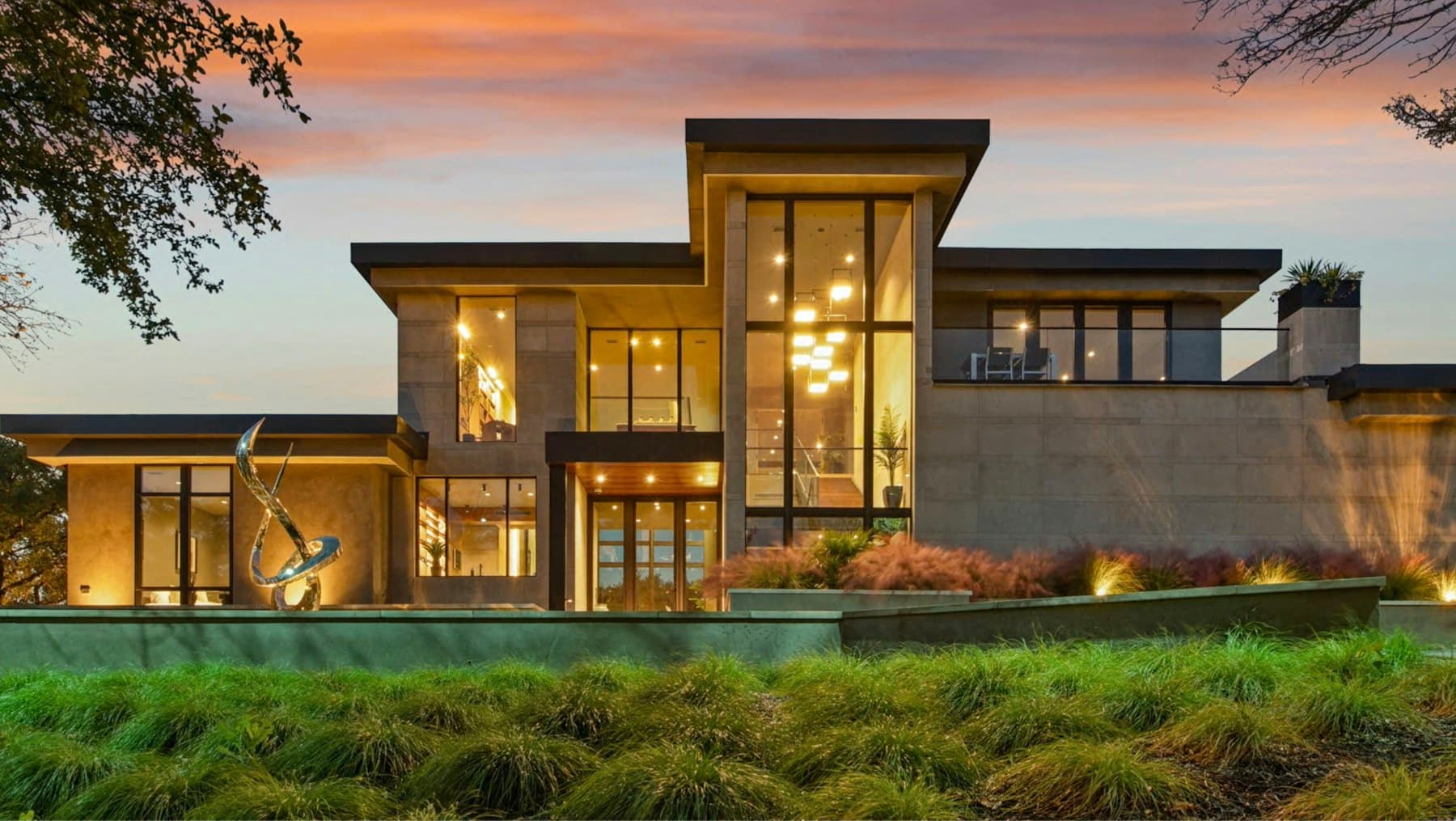
Rammed earth is a wall made out of dirt. No drywall, no paint, no chemicals, nothing. It has been around for thousands of years, but almost nobody knows about it except for a very small niche pocket of builders. In my opinion it's the future of healthy home building, and I think it might be the healthiest building material on the planet.
It's very different from traditional stick building with wood frames and drywall, and there's a lot to consider before you even think about building with it. Here's how it works, how it compares to concrete, what it does to mold and to your nervous system, and what it takes to build with.
What's Wrong With How Most Homes Are Built
Most modern homes are built with drywall, stick frames, and tons of chemicals. Sealants, plastic vapor barriers, off-gassing finishes. Anything that can harm the people living inside these buildings, we're basically using it. We're living in this chemical soup concoction that is the modern home, and we've accepted it as normal, when there are tons of alternatives that are way healthier and way better for the environment. The body and the nervous system don't like that, and people have been getting sicker and sicker.
Rammed earth is the flip side of that. It gives you an environment completely free of toxins, almost zero to no VOCs. It naturally regulates the humidity in the home, and it has tons of thermal mass. It also has this feeling you can't really explain until you experience it. That's why when people walk into a rammed earth home they say, "I don't know why, but I just feel so calm." It's not the aesthetics, even though it looks beautiful. It's something much deeper.
How Rammed Earth Is Built
Forms are set up similar to concrete, then soil is poured in in about 4 to 6 inch layers. Each layer is either manually or mechanically packed down until it's really compressed into a brick, and they do this over and over again, layer by layer.
Once the form comes off, you're left with natural striations, which is basically a geological footprint for the building. You get really beautiful natural patterns that are unique to that specific stone.
Rammed Earth Versus Concrete
When I was seeing this home with my friend, he asked me what makes it different from concrete.
First and foremost, concrete is poured, whereas rammed earth is compressed. Rammed earth also has all those natural properties that we want. Low to no VOCs, no off-gassing from petroleum binders, no need for sealants, paints, or synthetic finishes, and it actually acts as a buffer for indoor pollutants.
With concrete, cement production can produce toxic byproducts, it's often paired with sealers, epoxies, and synthetic paints, and it can off-gas for potentially years. Not to mention there's a huge difference in breathability and how it interacts with moisture.
Moisture And Mold
This leads perfectly into what I believe is the most important aspect of healthy home building.
How mold actually works
Most people think mold comes from leaks and water damage. Sometimes that's the case, but it's not actually the main reason it's a problem. Mold follows very simple rules. It needs three things:
- Moisture
- Something to eat
- Time
Most modern homes give it all three by default. Drywall has paper on it, and that's food. Wood framing, oriented strand board, insulation, mold loves all of these. Moisture eventually gets in because it always does, but now it can't get out, and that's when mold shows up. Not on the surface where you can see it, but inside the wall cavities. That's why so many people have mold issues even though their house looks fine. It's happening where you can't see it.
Why mold can't get a foothold in rammed earth
Mold can't eat it. It's basically sand, clay, and minerals. There's no paper, no cellulose, no wood, nothing for the mold to grow on. So even if moisture is present, it can't actually colonize on the wall itself. That alone is huge.
Rammed earth also doesn't trap moisture, it buffers it. As moisture and humidity increase, the walls absorb some of it, and when the air dries out the walls release it back into the environment. So instead of humidity spiking above 55, 65, 70 percent where mold loves to grow, the building naturally helps pull things back into balance. Ideally we want humidity somewhere between 35 to 50 percent. Modern homes rely heavily on HVAC and dehumidifiers to do that, but rammed earth just does it passively. Depending on where you live and the local environment you still might need some type of HVAC or dehumidifier, but the house is going to do a lot of the heavy lifting just by existing.
The other big thing is there are no wall cavities. Depending on how you build it, it's usually just solid stone, so typically there's no drywall, no insulation, and no hidden cavity where mold can colonize out of plain sight. If moisture shows up it's on the surface, and you'll be able to see it.
It doesn't decay
If drywall gets wet, it's ruined. If oriented strand board gets wet, it swells up and falls apart. If wood stays damp, it grows mold. Rammed earth gets wet and then it dries. No glue layers, no paper backing, no synthetic sandwich trapping all that moisture in. That's why there are rammed earth buildings hundreds of years old that are still standing.
Modern homes are built to fight moisture. Rammed earth is built to work with moisture. That's really the core idea. It's not assuming the house is going to be perfect forever, it's assuming moisture will occur and then designing the building so that it dries.
If Your Home Isn't Rammed Earth
At the time of making this, most homes are not built out of rammed earth, so we need to do everything we can to keep mold at bay. That looks like:
- A thorough inspection once or twice a year
- Leak detectors all over the place
- Proper air purification in the house
After testing the top air purifiers, I found the Jaspr air scrubber always came out on top. It's an industrial-grade unit with a true HEPA and carbon filter wrapped in a steel cage, and the top screen reads out PM2.5, the particulate matter in the air that's most harmful to human health. They were able to show with a third-party test that it removed 100 percent of airborne mold spores in 2 hours at the highest fan speed in a 500 square foot room. Considering almost every home in America has mold in it and it's just about how much, I think every home needs an air scrubber.
What Rammed Earth Does To Your Nervous System
That calm is the part people feel but can't quite explain. Maybe they think it's the color or the lighting or just the vibe. But your nervous system is picking up on way more than that. It's constantly scanning the environment for safety: temperature changes, sound, echo, harsh edges, air movement, humidity. All of that feeds in before your brain even knows what's going on.
Most modern homes are surprisingly stimulating. Thin walls, hard surfaces, sharp edges, echo, temperature changes, dry in one area and humid in another. So even if nothing feels wrong, something is slightly off and you're always a little on edge. It's not full-blown fight or flight, but you're a little bit stimulated, and that low-grade stress adds up.
Thermal mass
Because the walls are so thick and dense, there are never going to be huge temperature swings. There's no blasting hot and then cold, just a very gradual change over time, and your nervous system reads that slow change as safety.
Sound
Those dense earthen walls absorb vibration extremely well and don't echo the same way drywall does, so everything just feels quiet. Even when it's not silent outside or inside the home there's still way less background noise, and your body doesn't have to constantly filter through what it needs to pay attention to. It's like why people love going to the library to study or read. It's quiet, it's calming, there's little to no echo, and that feels really good for the system.
Humidity
Extremely dry climates and extremely wet climates are another subtle stress. When humidity is stable, breathing feels much easier. Your throat, your sinuses, and your chest all relax a little bit when they don't have to work so hard to breathe, and that feeds straight into vagal tone and nervous system regulation.
Visual noise
Most modern homes are filled with shiny materials, reflective surfaces, and straight lines everywhere. Rammed earth walls are matte, textured, and organic. There's nothing sharp or glassy or bouncing light back at you, and that allows your visual system to soften, which immediately tells the nervous system it's okay to relax.
Your nervous system is always responding to input, and inside a rammed earth house you're giving it way fewer inputs to think about. Less swings, less noise, less stress. Everything down regulates. That's exactly why people say it feels so grounding in there. It's not because it's made from earth and that's some symbolic thing, it's because your environment is now giving your body way more safety signals. And when your nervous system feels safe, everything works better. You sleep better, you digest better, you focus better, and you recover a lot faster. Once you experience it, it's very hard to go back.
What Building With Rammed Earth Actually Takes
Do you need special contractors?
Yes, 100 percent. This is probably something your average builder has not even heard of, and if they have heard of it they probably have no idea how to do it. You need rammed earth specialists, people who can test the soil, and structural engineers who are very familiar with earthen materials. Most failures come when someone tries to cut corners.
You're going to pay a premium for that. The whole team also needs to understand the vision, from the architect to the contractors to the builders to the designers. Everyone needs to be on the same page about the benefits and the unique capacities this material requires.
How much does it cost?
Rammed earth is typically more expensive upfront. You're typically looking at anywhere from $450 to $650 per square foot after everything's said and done, which is roughly about $150 more per square foot than a standard luxury custom home.
But you save on paint, drywall, finishes, long-term maintenance, and energy expenditure, and these walls can last for centuries. It's definitely not cheap building, but it is long-term building.
Can it be insured?
Yes, but it has to be permitted, engineered, and built to code. Insurance companies treat it very similar to masonry or concrete construction. I will say documentation really is everything, so you have to be super thorough, otherwise you might run into some problems.
Pros And Cons
Pros: a great natural building material that's low toxin, humidity regulating, fireproof, mold resistant, pest resistant, and sound dampening. It's great for the nervous system, with incredible longevity and health of the home overall.
Cons: it's pretty hard to build with, and you're going to need special contractors and experts to oversee the job. Much higher upfront cost, not crazy but significant. Longer construction timelines. And basically no flexibility once the home is built, because it's very hard to do anything after those walls go up.
Building with rammed earth is definitely not for everyone, but for the right project it's incredible.
Three Decisions You Can't Make Halfway Through
- Design. You have to plan way in advance exactly how you want things to be, because once those walls go up they cannot be changed. You're not moving walls later, you're not adding outlets, you're not deciding to open things up because it just feels better. You've got to lock in exactly what you want from the get-go, and I mean everything. Electrical, plumbing, window placement, all of it has to be extremely well thought out before you even get started.
- Climate. Rammed earth does not work well in all climates. In dry and moderate climates it's amazing. In more humid environments it can be done, but there needs to be proper planning. That means good roof overhangs, smart drainage, breathable finishes if you decide to put finishes on it, and proper ventilation.
- Hybrid building. Most rammed earth houses, and the best rammed earth houses, are usually not 100 percent rammed earth. They're hybrid builds, meaning you use rammed earth where it matters most and add modern systems where it makes sense. You can combine it with high-quality windows, an HVAC system, an ERV or HRV, and modern electrical and plumbing.
I think that last one is one of the biggest misconceptions people have with rammed earth, thinking it has to be a fully natural build. In reality it's about doing things smart, doing them intentionally, and creating really thoughtful design. Put the right materials in the right place and the systems work together instead of against each other.
Final Thoughts
Rammed earth is not perfect by any means, but for a healthy home I think it's one of the best materials on the planet. After doing tons of research, I think it might be the material I use to build my own home.